
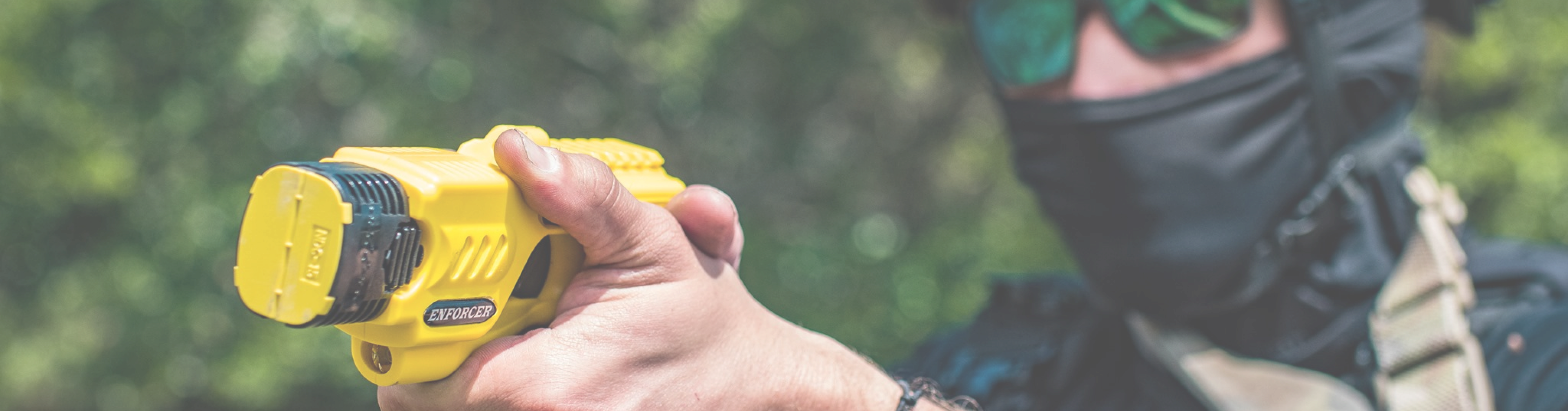

Selecting a conducted energy weapon for your agency is a decision you will live with for years. The right CEW keeps officers effective and subjects safer while standing up to budget scrutiny and public accountability. Here is a practical checklist to work through before you buy.
1. Effectiveness and stopping power
The core job of a CEW is reliable neuromuscular incapacitation. Look for a device that delivers consistent stopping power and includes a close-quarters fallback, a drive-stun capability, for situations where a subject closes distance or a probe misses. A tool that only works at range leaves officers exposed the moment the encounter changes.
2. Built-in safety features
Safety features protect officers, subjects, and the agency. Two to prioritize: an automatic shutdown that ends each discharge at a defined duration, which helps keep exposures within recognized medical limits, and a cartridge safety guard that prevents accidental discharge during handling. Peer-reviewed emergency-medicine research has examined CEW exposure durations, and a device that caps each activation by design keeps deployments inside a well-studied window.
3. Ammunition versatility
Consider the full range of situations your officers face. A platform that fires more than just darts, adding pepper-ball and pepper-powder options, covers single subjects, multi-subject incidents, vehicle extractions, and crowd situations on one device. Versatility means fewer separate systems to buy, stock, and train on.
4. Total cost of ownership
The purchase price is the smallest part of the story. Add up the multi-year cost: cartridges, training rounds, batteries, and any contract fees. Rechargeable batteries eliminate a recurring replacement expense. Reasonable ammunition pricing and cross-compatible cartridges lower your ongoing spend. And no long-term contract lock-in keeps your agency in control of its own budget.
5. Warranty and support
A CEW program is only as good as the support behind it. Look for a solid warranty covering the weapon, batteries, and accessories, plus fast replacement so a down unit does not leave an officer without a tool. Responsive support matters most on the day something goes wrong.
6. Training cost and simplicity
Finally, factor in how easy the device is to learn and how much it costs to keep officers certified. Simple, intuitive controls reduce hesitation in high-stress moments, and affordable training cartridges keep annual recertification within budget.
The bottom line
Work through effectiveness, safety, ammunition options, total cost of ownership, support, and training cost, and you will have a clear, defensible basis for your decision.
See how the PhaZZer Enforcer measures up: phazzershop.com/collections/phazzer-brand-cews